At Thrive Community Management, we help homeowners association boards throughout Goodyear and the West Valley make more informed financial decisions, strengthen community operations, and maintain accountability across the services their associations depend on.
Local Expertise. Financial Accountability. Management That Moves Your Community Forward.
Goodyear, Arizona, brings together established residential neighborhoods, expansive master-planned developments, and active-adult communities with increasingly complex management responsibilities. From protecting reserve funds and maintaining shared amenities to coordinating vendors and navigating Arizona HOA regulations, effective association management requires both operational consistency and long-term perspective.
Our approach combines full-service HOA management, financial oversight, board support, vendor coordination, and homeowner communication with an understanding of the challenges facing Arizona residential communities.
Whether your association is preparing for growth, addressing aging infrastructure, or evaluating a new management partner, Thrive provides the professional support needed to help your board lead with confidence.
Goodyear has developed into a significant residential destination in the Southwest Valley, with neighborhoods extending from the established Palm Valley area to the growing communities surrounding Estrella Parkway, Cotton Lane, and the Loop 303 corridor.
This geographic diversity creates distinct responsibilities for homeowners associations.
An established community may be evaluating landscape renovations, reserve funding, or aging infrastructure. A growing master-planned development may be managing new amenities, construction-related obligations, or the transition from developer oversight to homeowner governance. An active-adult association may have extensive recreational facilities and more complex capital planning requirements.
Although these communities differ, their boards face a common challenge: making financially responsible decisions while maintaining the services, amenities, and community standards homeowners expect.
Thrive approaches each association with an understanding of its governing documents, operating priorities, financial obligations, and physical assets.
Rather than applying a uniform management model, we help boards establish clear administrative processes, improve financial visibility, coordinate maintenance responsibilities, and strengthen communication.
The value of professional HOA management is not measured only by how quickly problems are resolved, but by how effectively a community is prepared for what comes next.
Goodyear's residential communities vary considerably in size, age, amenities, and management responsibilities.
From established neighborhoods near Interstate 10 to master-planned developments extending toward the Estrella Mountains, each association requires a management approach that reflects its unique structure and long-term obligations.
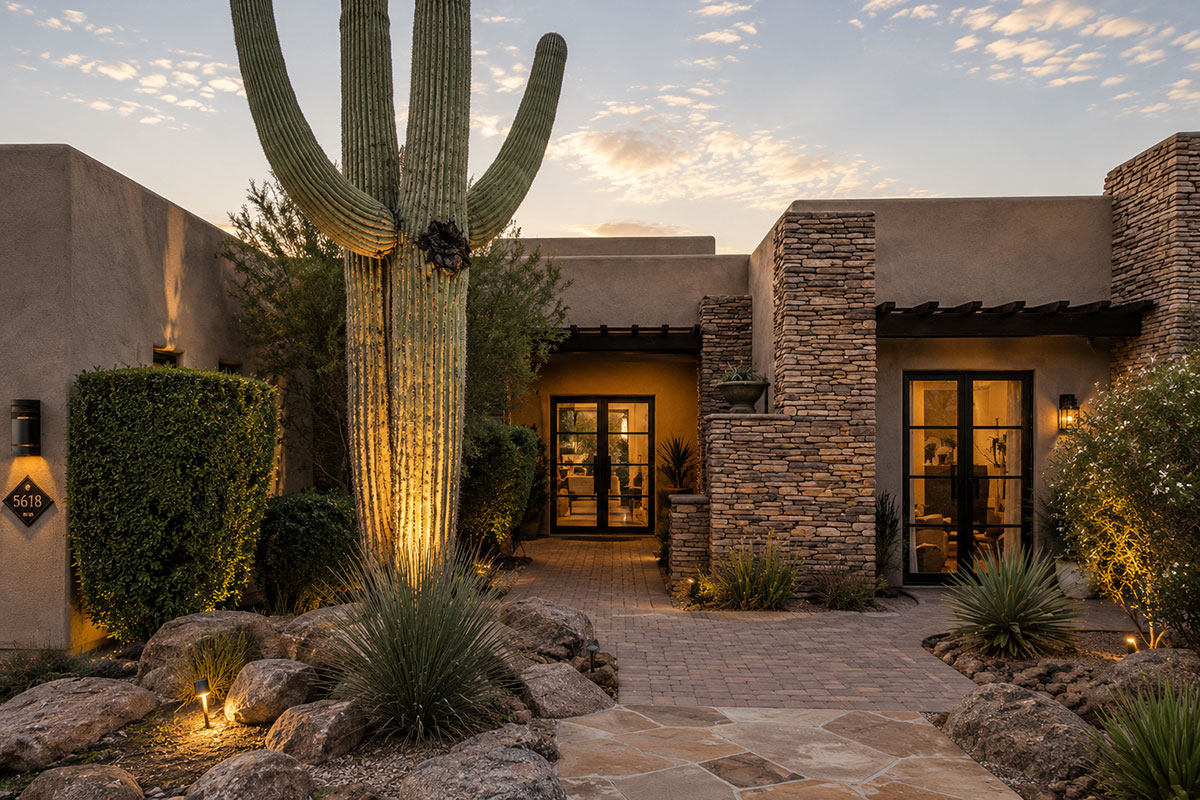
Communities such as Palm Valley, Canyon Trails, Wildflower Ranch, Cottonflower, and Sarival Village represent the established residential neighborhoods found throughout Goodyear.
As these communities mature, association priorities often shift toward maintaining aging infrastructure, evaluating reserve funding, and controlling recurring maintenance expenses.
Landscape systems, neighborhood entrances, irrigation equipment, perimeter walls, and common-area improvements require consistent attention.
Thrive helps single-family HOA boards approach these responsibilities through financial organization, vendor coordination, and long-term maintenance planning.
Our focus is on supporting community standards while helping boards understand the financial implications of maintaining shared assets.

Goodyear is home to significant master-planned developments, including Estrella, formerly known as Estrella Mountain Ranch, and portions of the Palm Valley residential area.
Large planned communities may include recreational facilities, parks, extensive landscaping, walking trails, shared infrastructure, and multiple neighborhood associations.
These amenities create meaningful benefits for homeowners, but they also require coordinated management and long-term financial planning.
For growing developments, responsibilities may evolve as construction progresses, additional common areas are transferred, and association governance changes.
Thrive supports master-planned associations with organized operations, financial visibility, vendor coordination, and management processes that can adapt as communities grow.

Goodyear is recognized for active-adult residential communities such as PebbleCreek and CantaMia at Estrella.
These communities may feature extensive recreational amenities, fitness facilities, landscaped common areas, gathering spaces, and other shared assets that contribute to the resident experience.
Maintaining those facilities requires more than routine service coordination. Boards must consider long-term replacement expenses, operating budgets, vendor performance, and the financial sustainability of community amenities.
Thrive's management philosophy emphasizes responsible financial planning, consistent operational oversight, and communication that supports the expectations of active-adult communities.

Gated neighborhoods within Goodyear may have additional responsibilities involving private roads, access systems, entry landscaping, security-related vendor agreements, and shared infrastructure.
Depending on the association's governing documents, boards may be responsible for maintaining gates, access equipment, perimeter improvements, and other community facilities.
Thrive helps associations coordinate vendor relationships, maintenance priorities, and financial planning for these shared assets.
Our approach emphasizes the relationship between community access, operational reliability, and long-term infrastructure maintenance.

Condominium and townhome associations may be responsible for shared building components, exterior maintenance, landscaping, insurance coordination, and other common elements.
These responsibilities require careful attention to the association's governing documents, ownership structure, and applicable Arizona statutes.
Thrive helps boards coordinate administrative processes, financial priorities, and maintenance responsibilities according to the needs of their communities.
An effective homeowners association operates through a connected system of financial oversight, administrative organization, vendor coordination, property maintenance, and board governance.
When these responsibilities are managed consistently, boards gain greater control over community operations and can devote more attention to long-term priorities.
Thrive provides comprehensive HOA management services in Goodyear, AZ, tailored to the size, structure, and operational demands of each association.
Daily community operations require more coordination than many homeowners realize. Board directives must be implemented, records maintained, vendor obligations monitored, and resident concerns addressed through consistent administrative procedures.
Thrive helps organize these responsibilities through structured management processes, clear communication, and dependable operational coordination.
Our approach reduces the administrative demands placed on volunteer boards while helping leadership maintain visibility into association activities and priorities.
An association's financial position extends beyond its current operating balance.
Boards must evaluate assessment income, ongoing expenses, reserve contributions, future repairs, and the financial implications of maintaining shared assets.
For Goodyear communities, these obligations may include irrigation infrastructure, community pools, recreational facilities, perimeter walls, landscape renovations, and other long-term capital improvements.
Thrive supports budget preparation, financial reporting, assessment administration, expense monitoring, and reserve planning coordination to help boards understand their financial responsibilities.
Clear financial information allows associations to make more informed decisions about maintenance, capital improvements, and future funding needs.
Volunteer board members are responsible for decisions involving community finances, governing documents, homeowner expectations, and the maintenance of association-owned property.
Professional management should make those responsibilities more manageable without diminishing the board's authority.
Thrive assists with meeting preparation, administrative records, communication, governing-document procedures, and implementation of board-approved decisions.
Our approach emphasizes informed leadership, organized governance, and clear accountability between the board and management.
Maintaining residential communities across Goodyear requires coordinated relationships with landscape contractors, irrigation specialists, pool service providers, maintenance companies, and other vendors.
The city's desert climate adds further considerations. Prolonged summer heat, seasonal monsoon storms, and ongoing irrigation demands can influence maintenance schedules, service costs, and long-term infrastructure performance.
Thrive helps boards coordinate vendor activities, monitor service expectations, and evaluate maintenance priorities.
We emphasize consistent oversight, preventive maintenance planning, and responsible use of association resources.
Community standards are most effective when supported by clear procedures, organized records, and consistent administration.
Thrive assists with architectural request coordination, governing-document administration, homeowner correspondence, and implementation of board-established association policies.
Our approach recognizes that association procedures must operate within applicable Arizona law and the community's recorded governing documents.
Homeowners should have a clear understanding of how to access association information, submit requests, and communicate with management.
Thrive emphasizes accessible homeowner services, organized administrative processes, and consistent communication that supports more constructive relationships between residents, board members, and management.
A well-managed community is not defined only by its physical appearance. It is also reflected in how effectively its people are informed and supported.
Changing HOA management companies is an opportunity to evaluate what the association needs from its next management relationship.
Whether the decision involves financial reporting, communication, service expectations, or organizational growth, a successful transition requires careful planning.
Thrive helps coordinate the transfer of records, financial information, vendor agreements, and outstanding administrative responsibilities while establishing clear priorities for the new management arrangement.
Our objective is to help boards move forward with greater continuity, transparency, and operational confidence.
For Goodyear homeowners associations, landscape management is closely connected to water efficiency, operating expenses, and the long-term condition of community infrastructure.
The city's desert environment creates demanding conditions for irrigation systems, turf, trees, and landscaped common areas.
As communities mature, boards must evaluate whether existing maintenance practices remain financially sustainable.
Replacing outdated irrigation equipment, converting high-water-use landscaping, improving system efficiency, or redesigning shared outdoor spaces can require substantial investment.
These decisions involve more than immediate installation costs. Boards must also consider potential water savings, future maintenance obligations, vendor qualifications, and the expectations established in their governing documents.
The City of Goodyear provides landscape water budgeting resources specifically for HOAs and multifamily properties, helping associations better understand and evaluate outdoor water consumption.
The city's Water Efficient Partners program also recognizes participating associations that meet established landscape water-use efficiency goals.
These local resources create opportunities for boards to approach conservation as part of a broader financial and maintenance strategy.
Thrive helps associations connect landscape decisions with budgeting, vendor oversight, and long-term infrastructure planning.
Responsible maintenance is not simply about keeping common areas attractive. It is about understanding what those assets cost to operate, maintain, and eventually replace.
Serving communities throughout Goodyear, Arizona, and the Southwest Valley.
Homeowners associations in Goodyear operate within Arizona's statutory framework, their recorded governing documents, and applicable municipal requirements.
Most planned communities are subject to the Arizona Planned Communities Act, A.R.S. Title 33, Chapter 16, while condominium associations generally operate under the Arizona Condominium Act, A.R.S. Title 33, Chapter 9.
These statutes address important aspects of association governance, including board meetings, records, assessments, homeowner rights, and administrative procedures.
Thrive supports organized management practices that help boards carry out their responsibilities while recognizing when legal questions require guidance from qualified Arizona association counsel.
Arizona law establishes requirements concerning association meetings and access to certain financial and administrative records.
For planned communities, A.R.S. §33-1804 addresses open meetings, while A.R.S. §33-1805 governs access to association records, subject to statutory exceptions.
Effective governance depends on maintaining organized information, documenting decisions, and following consistent administrative procedures.
Thrive assists boards with meeting preparation, records coordination, and operational communication to support informed leadership.
Architectural guidelines help associations maintain community standards, but restrictions must be evaluated alongside applicable state law and municipal requirements.
Arizona statutes address certain homeowner improvements, including solar energy devices, water conservation measures, and qualifying residential shade structures.
A.R.S. §33-1816.01 addresses limitations on planned community restrictions involving backyard shade structures, subject to statutory conditions.
For Goodyear homeowners, where outdoor living spaces, shade, and desert-conscious landscaping are practical considerations, these provisions reinforce the importance of maintaining legally consistent architectural procedures.
Parking regulations and roadway maintenance responsibilities can vary depending on whether streets are publicly owned or privately maintained.
A.R.S. §33-1818 addresses the authority of certain planned community associations to regulate public roadways, with requirements that depend on the association's declaration and other statutory conditions.
Before adopting or enforcing roadway restrictions, boards should understand the ownership of the affected streets, their governing documents, and applicable legal requirements.
The City of Goodyear maintains neighborhood resources, including an interactive HOA map that helps residents identify association information and property management contacts.
The city also provides information concerning water conservation, neighborhood communication, and municipal regulations.
For associations considering changes to common-area improvements, landscaping, drainage, or other infrastructure, applicable city development and engineering requirements may also need to be considered.
Thrive believes effective governance begins with informed decisions, organized processes, and a clear understanding of community responsibilities.
Choosing a management company is about more than comparing monthly fees or reviewing a list of services.
It is about finding a partner that understands the board's responsibilities, communicates clearly, and supports decisions that influence the community's financial and operational future.
With an office in Peoria, Thrive maintains a regional presence in the West Valley and understands the broader residential environment connecting Goodyear, Avondale, Litchfield Park, Buckeye, and surrounding communities.
Our approach considers Arizona's climate, community development patterns, and the operational demands of residential associations.
Boards need financial information they can use to evaluate budgets, maintenance priorities, and future obligations.
Thrive emphasizes organized financial reporting, budgeting support, and long-term planning that help association leaders understand their financial position.
The board is responsible for governing the association.
Thrive provides administrative coordination, management guidance, and operational follow-through to support board-approved decisions.
We believe professional management should strengthen the board's ability to lead, not replace its judgment.
A master-planned development with extensive recreational amenities has different responsibilities from a mature single-family neighborhood or gated community.
Thrive approaches each association by understanding its governing structure, financial priorities, physical assets, and homeowner expectations.
Our focus is on helping boards manage today's responsibilities while building a stronger foundation for the future.
Not every management transition begins with a major dispute.
Sometimes the signs are more subtle.
Financial reports require repeated clarification. Maintenance projects move forward without clear updates. Vendor performance becomes difficult to evaluate. Board members spend increasing amounts of time following up on administrative responsibilities that should already be coordinated.
Over time, these issues can affect more than daily efficiency. They can limit the board's ability to plan, communicate, and make confident financial decisions.
A management review gives the association an opportunity to evaluate whether its current partnership still reflects the community's needs.
At Thrive, we help boards approach that decision with a focus on their priorities, operational challenges, and long-term objectives.
Whether your association is actively considering a management transition or simply exploring alternatives, our team can discuss the support available.
Your HOA management company should make responsible governance easier, not create another layer of work for your board.
HOA management fees depend on the number of homes, community amenities, maintenance responsibilities, administrative workload, and services included in the agreement.
Associations with extensive common areas or complex financial responsibilities may require different management arrangements from smaller residential neighborhoods.
Thrive can discuss your community's needs and provide a management proposal based on its service requirements.
Yes, subject to the association's existing management agreement, governing documents, and applicable law.
Boards should review contract termination provisions, notice requirements, financial records, vendor agreements, and outstanding administrative obligations before beginning the transition.
Thrive can help coordinate an organized transfer of management responsibilities.
Boards should evaluate financial reporting, communication practices, vendor oversight, knowledge of Arizona association requirements, experience with comparable communities, and the ability to support long-term maintenance planning.
A strong management relationship should provide clear expectations, consistent processes, and meaningful support for board decision-making.
Planned community associations are generally governed by the Arizona Planned Communities Act, A.R.S. Title 33, Chapter 16.
Condominium associations generally operate under the Arizona Condominium Act, A.R.S. Title 33, Chapter 9.
Associations must also consider their recorded governing documents and applicable municipal requirements.
Boards can evaluate irrigation performance, landscape design, water consumption, vendor practices, and the long-term costs of maintaining common areas.
The City of Goodyear offers landscape water budgeting resources for homeowners associations, which can help inform conservation and maintenance decisions.
Reserve planning helps associations anticipate the future repair and replacement of shared assets, including irrigation systems, recreational facilities, perimeter walls, and other common-area improvements.
As infrastructure ages, these obligations can become increasingly significant.
Periodic reserve evaluations and informed budgeting help boards prepare for anticipated expenses and evaluate funding strategies.
Thrive offers community association management services for a range of residential community structures, including single-family neighborhoods, master-planned developments, condominiums, gated communities, and active-adult associations.
Specific service arrangements depend on the association's size, governing documents, assets, and operational responsibilities.
Thrive Community Management maintains offices in Chandler and Peoria and provides HOA management services in Arizona.
Associations in Goodyear and surrounding Southwest Valley communities can contact Thrive to discuss their management requirements and confirm service availability.
Strong communities depend on informed leadership, responsible financial decisions, and consistent attention to the assets and services homeowners share.
Whether your Goodyear association is preparing for future growth, managing established neighborhood infrastructure, or evaluating a change in management, the right partnership can help bring greater organization and confidence to the process.
Thrive Community Management helps Arizona HOA boards turn complex responsibilities into clearer decisions, stronger operations, and more sustainable community management.
Discover what a more thoughtful management partnership could mean for your association.